Fiber optic cables use light to transmit data, offering higher speeds, longer distances, and lower interference than traditional copper Ethernet cables.What Are Fiber Optic Cables?
Fiber optic cables transmit data as light pulses through thin strands of glass or plastic, rather than electrical signals, which makes them highly resistant to electromagnetic interference and capable of supporting high bandwidth over long distances ( ). The core of the fiber carries the light signal, surrounded by cladding with a lower refractive index to ensure total internal reflection, and a protective coating to prevent physical damage ( ).
Types of Fiber Optic Cables
1. Single-Mode Fiber (SMF):
- Small core diameter (~9 microns)
- Supports a single light mode, ideal for long-distance, high-speed transmission
- Common grades: OS1 (indoor) and OS2 (outdoor, long-range) ( ) 2. Multi-Mode Fiber (MMF):
- Larger core diameter (50–62.5 microns)
- Supports multiple light modes, suitable for shorter distances
- Common grades: OM1, OM2, OM3, OM4, OM5; OM3/OM4 are widely used for 10G/40G networks, OM5 supports emerging SWDM applications ( )
Connectors and Configurations
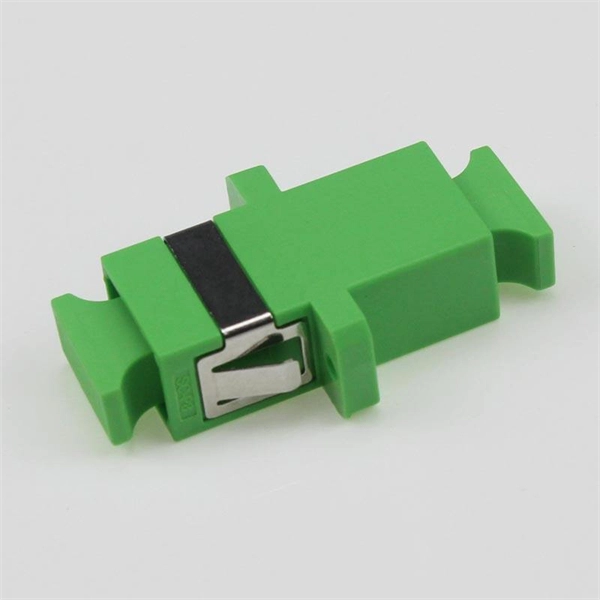
Fiber optic cables use various connectors such as LC, SC, ST, MPO/MTP, and CS, which are chosen based on space constraints, network density, and performance requirements ( ). Cables can be simplex (single fiber) or duplex (paired fibers for bidirectional communication). Pre-terminated solutions like Active Optical Cables (AOC) and Direct Attach Cables (DAC) simplify installation and reduce labor costs ( ).
Advantages Over Copper Ethernet
- Longer distances: Fiber can span hundreds of meters to over 100 km without signal degradation, compared to copper Ethernet's 100 meters limit ( )
- Higher bandwidth: Supports multi-gigabit speeds and future-proofing for high-density networks ( )
- Electrical isolation: Prevents interference and protects devices from surges, especially in outdoor or inter-building connections ( )
- Durability: Lighter, stronger, and less prone to corrosion than copper cables ( )
Installation Considerations
- Avoid bending fiber beyond manufacturer specifications to prevent attenuation or microfractures ( )
- Use appropriate indoor/outdoor-rated cables depending on environment
- Consider fiber-to-Ethernet media converters for connecting fiber to standard RJ-45 devices
- Ensure proper cleaning and maintenance of connectors to maintain signal integrity ( )
Summary
Fiber optic cables are essential for modern networks requiring high-speed, long-distance, and interference-free data transmission. Choosing the right type (single-mode vs multimode), grade (OS1/OS2, OM3/OM4/OM5), and connector configuration ensures optimal performance, scalability, and reliability for home, office, or enterprise networks ( ).