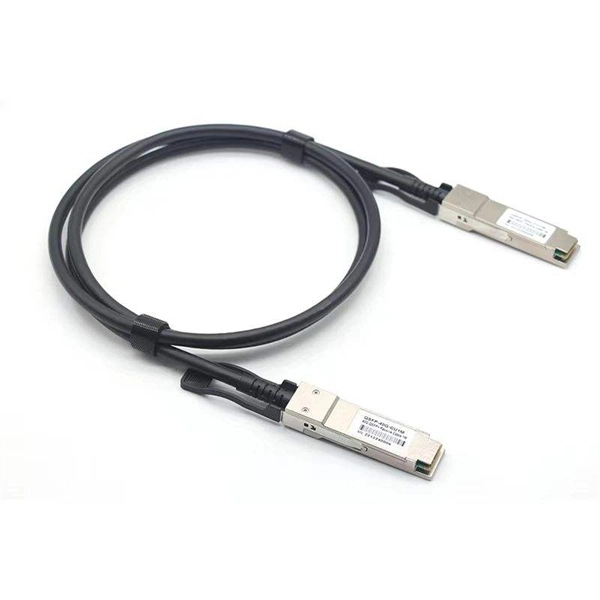
Fiber optic cables are characterized by core and cladding dimensions, mode field diameter, attenuation, dispersion, and mechanical properties, while proper identification relies on standardized color codes, labeling, and documentation.Key Fiber Optic Cable Parameters
Core and Cladding: The core is the central glass or plastic strand that transmits light, typically ultra-pure silica for minimal loss, while the cladding surrounds the core with a lower refractive index to enable total internal reflection . Single-mode fibers have a core diameter of about 8–10 µm, while multimode fibers range from 50–62.5 µm . Mode Field Diameter (MFD): Represents the transverse extent of the light field in single-mode fibers, affecting coupling efficiency and splice loss . Attenuation: Measured in dB/km, it quantifies optical signal loss along the fiber. Lower attenuation is critical for long-distance transmission . Chromatic and Polarization Mode Dispersion: Chromatic dispersion affects pulse broadening over distance, while polarization mode dispersion impacts high-speed single-mode links . Mechanical and Environmental Properties: Include tensile strength, bend radius, water-blocking, and jacket type. Loose tube, ribbon, micromodule, and intermittently bonded ribbon (IBR) cables offer different mechanical protections and installation flexibility . Cut-off Wavelength and Macrobending Loss: Define the operational wavelength range and sensitivity to bending, important for system design and installation .
Fiber Optic Cable Types
- Loose Tube Cable: Fibers are loosely packed in polymer tubes, often water-blocked, suitable for high fiber counts .
- Ribbon Cable: Fibers arranged in flat ribbons for mass fusion splicing, reducing repair time .
- Micromodule Cable: Groups of fibers in flexible, strippable modules with water-resistant filling .
- Intermittently Bonded Ribbon (IBR): Combines loose tube flexibility with ribbon splicing efficiency .
Cable Identification and Labeling
Standards: TIA-606-B provides guidelines for labeling, color coding, and documentation . Color Coding: Yellow for single-mode, orange or aqua for multimode fibers . Labeling Practices: Include cable ID, routing path, installation date, and use durable, weather-resistant materials for both indoor and outdoor environments . Tools and Verification: Use optical fiber identifiers, OTDR, and portable printers or laser engravers to ensure accurate labeling and traceability . Regular audits and staff training maintain identification integrity and reduce downtime.
Testing and Quality Verification
Visual Inspection: Detects scratches, cracks, or contamination on fiber endfaces . Insertion Loss Testing: Measures total optical loss to confirm compliance with design budgets . OTDR Testing: Identifies events along the fiber length, including splices, bends, and breaks . Continuity Testing: Ensures each fiber core is intact and correctly mapped . Mechanical Integrity Checks: Verify that installation handling has not caused latent defects .
Summary
Understanding fiber optic cable parameters—including core/cladding dimensions, MFD, attenuation, dispersion, and mechanical properties—is essential for selecting the right cable for a given application. Proper identification using TIA-606-B standards, color coding, durable labeling, and verification tools ensures efficient network management, reduces downtime, and supports long-term reliability in both indoor and outdoor deployments .