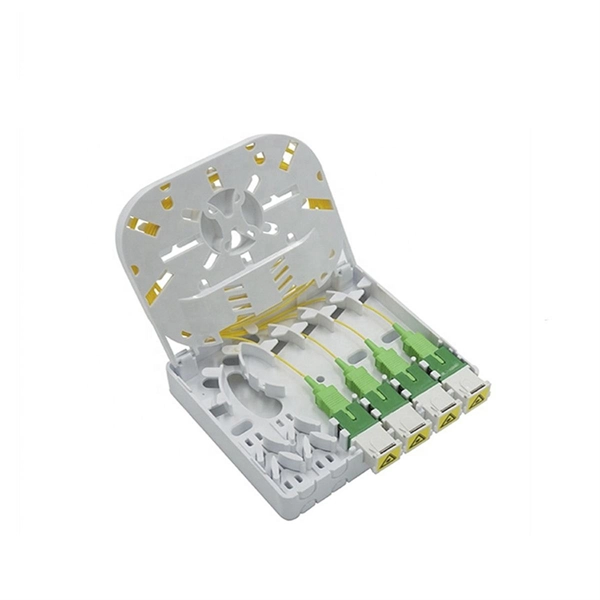
A modular frame structure optical module integrates TOSA, ROSA, PCBA, and optical interfaces within a compact, standardized housing to enable efficient electro-optical signal conversion and flexible deployment in fiber optic systems.Overview
A modular frame structure optical module is designed to facilitate electrical-to-optical and optical-to-electrical signal conversion in fiber optic communication systems, operating at the physical layer of the OSI model . Its modular design allows for easy integration, maintenance, and scalability in high-speed networks, including SFP, SFP+, XFP, and CFP form factors .
Core Components
- TOSA (Transmitter Optical Sub-Assembly)
- Converts electrical signals into optical signals using a laser diode (LD) or LED .
- Includes optical isolators, monitoring photodiodes, LD driver circuits, thermistors, thermoelectric coolers (TEC), automatic temperature control (ATC), and automatic power control (APC) .
- The laser diode is the core, providing high output power, low energy consumption, and efficient coupling.
- ROSA (Receiver Optical Sub-Assembly)
- Converts incoming optical signals back into electrical signals using a photodetector (PIN or APD) and a preamplifier .
- Ensures accurate signal detection and amplification for downstream processing.
- PCBA (Printed Circuit Board Assembly)
- Houses driver circuits, control circuits, and temperature regulation circuits .
- Manages laser diode modulation, photodiode biasing, and overall module performance.
- Optical and Electrical Interfaces
- Standardized connectors allow plug-and-play integration with network devices.
- Includes coupling lenses to focus light into fibers and isolators to prevent back-reflection .
Modular Frame Benefits
- Compact and standardized housing enables interoperability across devices and form factors.
- Ease of maintenance and replacement due to modular sub-assemblies.
- Thermal and power management is simplified through integrated TECs and APC circuits.
- Scalability for high-bandwidth applications, supporting 100 Gbps to 400 Gbps data rates .
Working Principle
Electrical signals enter the module and are processed by the driver circuits, which modulate the laser diode in the TOSA to emit optical signals. These signals travel through the fiber to the receiving end, where the ROSA converts them back into electrical signals for further processing . The modular frame ensures that each sub-assembly is precisely aligned and thermally stabilized, maintaining signal integrity and performance. In summary, a modular frame structure optical module combines TOSA, ROSA, PCBA, and optical interfaces within a compact, standardized housing, providing efficient, reliable, and scalable optical communication for modern high-speed networks .