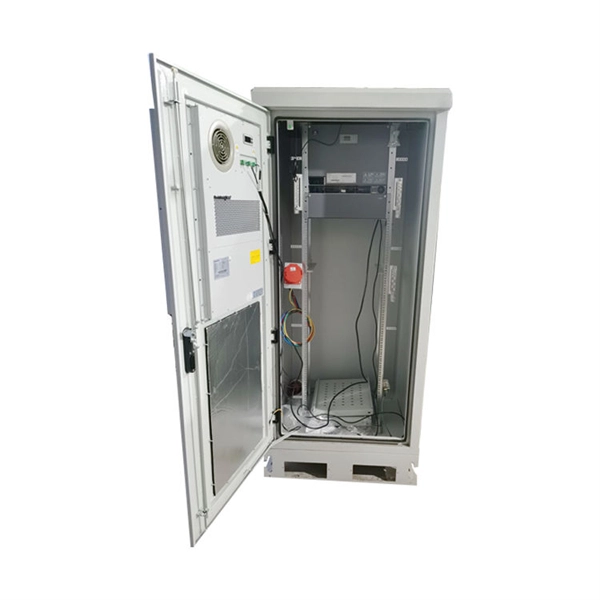
Fiber optic heating monitoring uses distributed temperature sensing to detect hotspots and temperature changes along cables in real-time, enhancing safety and operational reliability.Overview of Fiber Optic Heating Monitoring
Fiber optic cables can function as continuous temperature sensors, enabling real-time monitoring of heat along their entire length. These systems are widely used in power grids, tunnels, industrial facilities, pipelines, and battery storage systems to detect overheating, fire risks, or abnormal thermal conditions . Unlike conventional point sensors, fiber optic systems provide a truly distributed temperature profile, allowing detection at any point along the cable with high spatial resolution.
Key Technologies
1. Distributed Temperature Sensing (DTS): DTS systems measure temperature along the fiber by analyzing backscattered light, typically using the Raman effect. They can detect and locate hotspots with meter-level accuracy and temperature precision within ±1°C, providing continuous monitoring over distances up to 10 km or more . DTS is ideal for monitoring power cables, pipelines, and industrial assets, offering early warning of thermal anomalies and enabling predictive maintenance . 2. Linear Heat Detection (LHD): Fiber optic LHD systems use a single optical fiber as a linear temperature sensor. They respond to heat at any point along the cable, detecting fires or hotspots with high precision. For example, a 10 km LHD system can measure 10,000 temperature points every 5 seconds, providing rapid detection and accurate information on fire location, size, and spread . LHD is commonly deployed in tunnels, car parks, solar farms, and battery storage facilities.
Advantages of Fiber Optic Monitoring
- Continuous and distributed sensing: No gaps along the cable, unlike discrete sensors.
- High accuracy and early detection: Hotspots can be located within 1 meter, and temperature changes are detected in real-time .
- Resilience and safety: Immune to electromagnetic interference, intrinsically safe for hazardous areas, and resistant to corrosion .
- Low maintenance: Passive optical fibers have no moving parts, joints, or apertures, reducing long-term maintenance needs .
- Integration with monitoring systems: Can be connected to SCADA, DCS, or APM platforms for predictive maintenance and automated alerts .
Applications
- Power cables: Detect gradual thermal accumulation, prevent insulation failure, and ensure network reliability .
- Industrial facilities and tunnels: Monitor temperature along conveyors, cable trays, and storage areas to prevent fire hazards .
- Pipelines and wells: Detect leaks, temperature changes, and third-party intrusions, ensuring operational integrity .
- Critical infrastructure: Battery storage, solar farms, and utility tunnels benefit from early fire detection and continuous monitoring .
Conclusion
Fiber optic heating monitoring provides highly accurate, real-time, and distributed temperature sensing across long distances, making it a superior solution for fire detection, predictive maintenance, and operational safety in critical infrastructure. By combining DTS or LHD technologies with robust fiber optic cables, operators can detect hotspots early, respond quickly to anomalies, and maintain system reliability .